Neo and SpoonOS have announced the winners of the Scoop AI Hackathon’s Silicon Valley Bowl, where builders created AI-native applications using blockchain and multi-agent infrastructure. The two-day event, held Nov. 22–23 in Santa Clara, California, featured projects exploring productivity, real-time analytics, decentralized intelligence, and applied science. More than US $60,000 in prizes were awarded across challenge tracks.
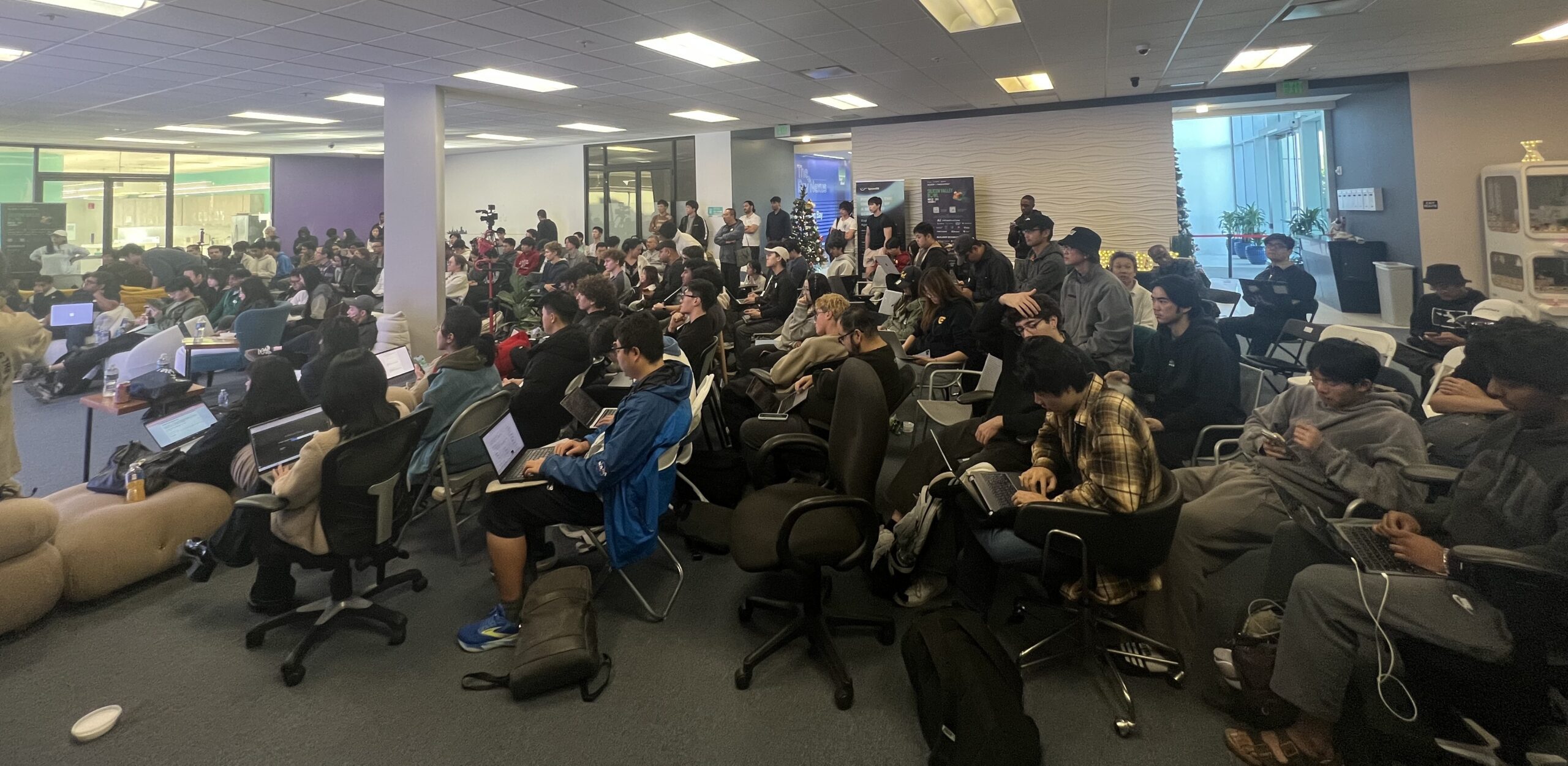
Participants at the Silicon Valley Scoop AI Hackathon
Partners contributing to this event represented multiple layers of the modern AI stack, including inference, data routing, multimodal generation, and distributed systems. Organizations such as Google Cloud, TRAE, Antigma, Rialo, Boins.ai, Surf, Desearch, Manus, ElevenLabs, AIOZ Network, and Gata were present, with several providing hands-on access to infrastructure, tooling, and mentorship.
First Place – Slack-a-Vibe
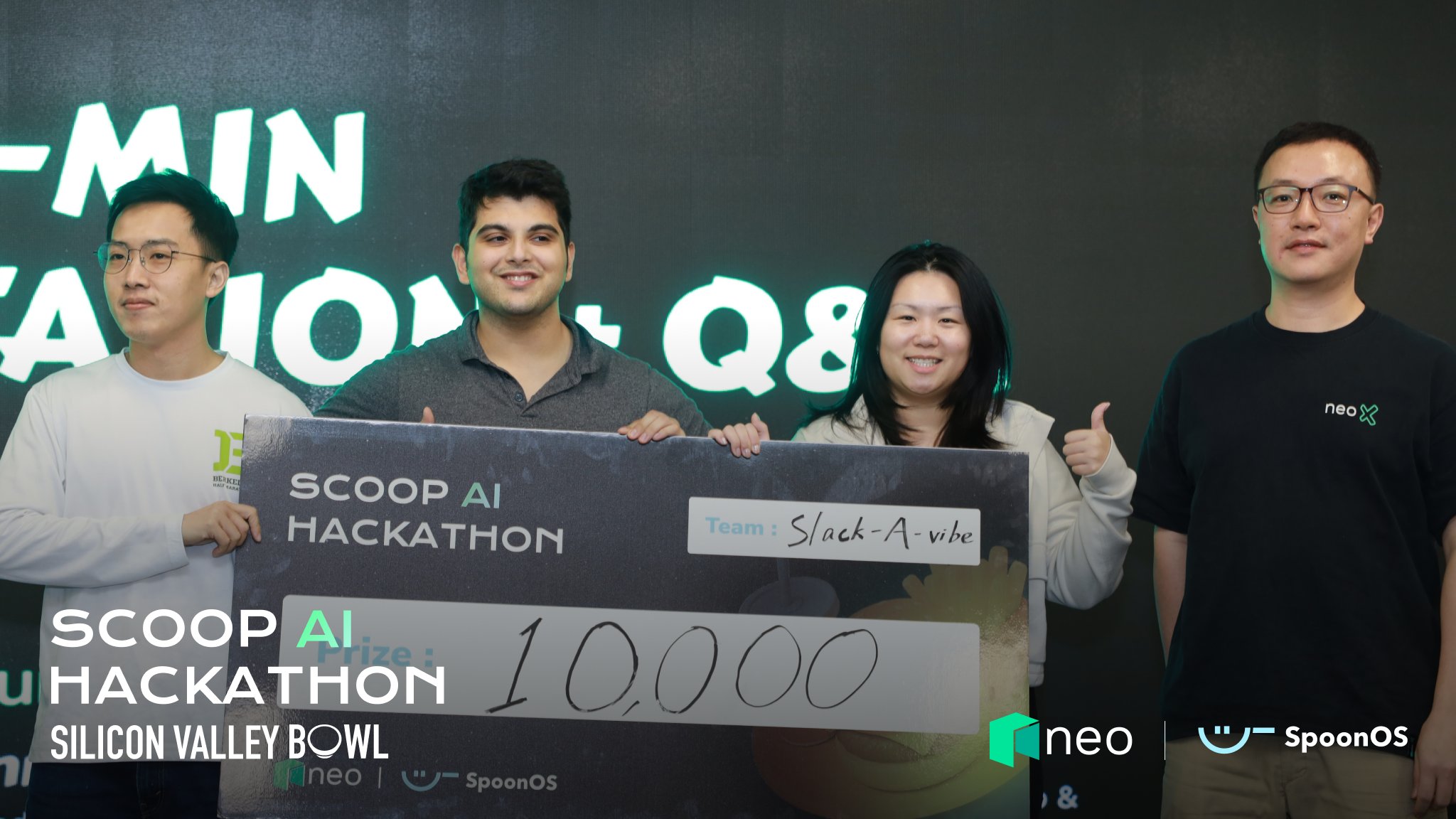
The top prize went to Slack-a-Vibe, which won US $8,000 and an additional $2,000 in resource grants from event partners. Slack-a-Vibe is an AI coding assistant embedded directly into Slack, developed by a three-person team. The project integrates with SpoonOS, GitHub, and Jira, allowing developers to trigger builds, collaborate in real time, and execute tasks within existing team chats. Slack-a-Vibe supports concurrent task execution and is aimed at being a practical tool for engineering teams managing complex codebases.
A demo video can be found below:
Second Place – Genius Loci, StreamSentry, and Parallel
Three second place prizes were awarded, each receiving $4,500 and $500 in resource grants from event partners.
Genius Loci reimagines physical locations as autonomous agents that post bounties for real-world data and instantly pay contributors who fulfill them. Using SpoonOS state graphs, GPT-powered analysis, and x402 payments, locations can now be incentivized for users to verify conditions like crowd size or signage. The system is aimed at transforming GPS coordinates into decentralized information markets, offering a new model for crowd-sourced environmental awareness.
A demo video can be found below:
StreamSentry aims to convert traditional surveillance systems into intelligent security platforms. The application uses multimodal AI — including visual, audio, and contextual data — to detect dangerous events in real time. When incidents occur, the system logs immutable records to a blockchain-backed audit trail using SpoonOS infrastructure. Real-time alerts and edge-device processing reduce latency and preserve privacy, while providing legal-grade evidence trails.
A demo video can be found below:
Parallel is a shared workspace platform where members are paired with an AI agent that tracks individual workflows, synchronizes updates, and manages team-wide coordination. Designed for fast-paced engineering teams, the system features multi-agent synchronization, cross-client live state streaming, and voice collaboration layers. Built in under 36 hours, it is aimed at demonstrating the use of SpoonOS to orchestrate scalable agentic teamwork.
An explainer video can be found below:
Third Place – Tasteract, Whaisper, Research Bro, and OpenMedicine AI
Four third place prizes were awarded. Each team received $2,500 and $500 in resource grants from event partners.
Tasteract is developing a universal taste-embedding model, using machine learning to let machines understand flavor. The team collected a dataset and trained a graph neural network to support applications in food science and nutrition.
Whaisper introduced a ring-shaped wearable assistant powered by AI agents. It helps users with everyday tasks such as calendar reminders and note-taking, offering a personal assistant in discreet, voice-activated hardware.
Research Bro streamlines cognitive science workflows with a five-agent system that automates literature analysis, hypothesis formation, and experiment simulation. Built using SpoonOS, the platform is aimed at transforming scientific research through synthetic validation and dynamic knowledge graphs.
OpenMedicine AI is a virtual care platform that transforms multimodal inputs—text, video, and voice—into structured clinical notes. The AI system triages symptoms, offers treatment suggestions, and connects with real-world clinicians, while capturing longitudinal data for personalized care pathways.
The original announcement can be found in the link below:
https://x.com/SpoonOS_ai/status/1993241783736869055?s=20



About The Author: Dean Jeffs
Dean is a digital project manager who has worked extensively with start ups and agencies in the marketing space. Fascinated by the potential applications of blockchain technology, Dean has a passion for realising the new smart economy.
More posts by Dean Jeffs